[Rédacteur]
[Propriétaire MU Média – MetalUniverse.net]
Entrevue avec URNE (Joe Nally et Angus Neyra)
Par Marc Desgagné (MetalUniverse.net, Québec, Canada)
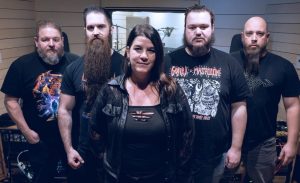
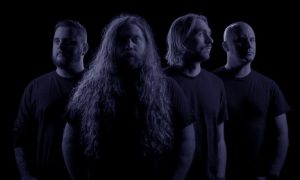
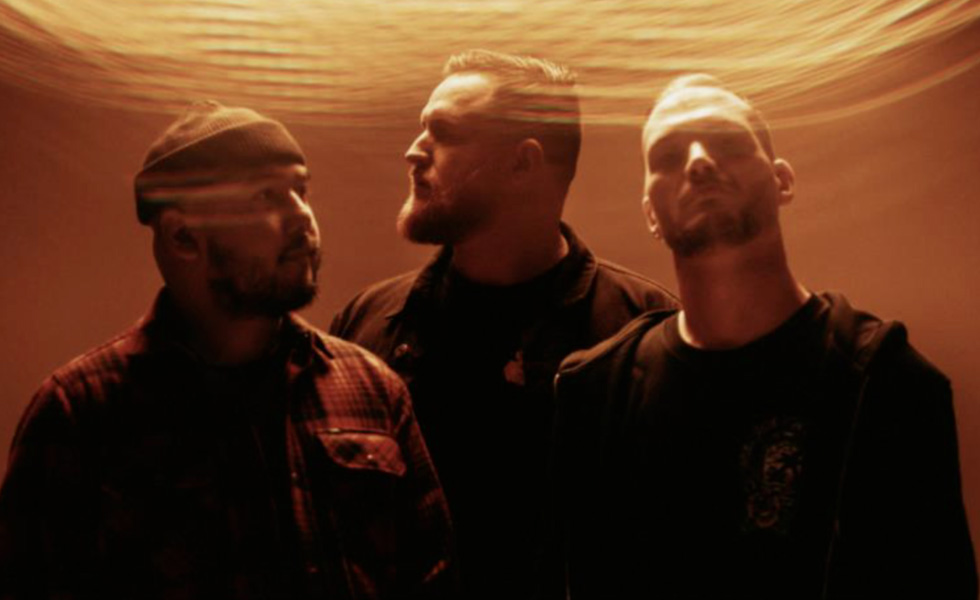
Récemment, Marc Desgagné de MetalUniverse.net s’est entretenu avec Joe Nally (chant, basse) et Angus Neyra (guitare) de la formation britannique URNE. Les deux musiciens ont répondu aux questions à l’approche de la sortie de leur nouvel album Setting Fire To The Sky, prévu le 30 janvier 2026 via Spinefarm Records. La discussion aborde l’évolution du groupe, l’élargissement de leur identité sonore, l’équilibre entre lourdeur et émotion, le processus créatif en studio, les influences marquantes, les collaborations, ainsi que leur vision artistique actuelle.
[ english follows ]
MU: Votre nouvel album Setting Fire To The Sky, qui sort le 30 janvier 2026 via Spinefarm Records, sonne comme une déclaration forte pour URNE. À quel moment avez-vous réalisé que ce disque représenterait une étape importante pour le groupe?
Angus: En tant que groupe, on essaie toujours de se pousser vers l’avant, et j’ai vraiment l’impression que SFTTS est l’étape la plus solide jusqu’ici dans ce que nous voulons être comme musiciens. Pour moi, c’est quand on a commencé à répéter des chansons comme Be Not Dismayed ou Ancient Horizon en live que j’ai réalisé qu’on tenait quelque chose de spécial. Il y a aussi eu un moment en studio, quand on a entendu pour la première fois les couches de violoncelle de Jo Quail sur la pièce finale Breathe, ça m’a frappé immédiatement.
MU: Des influences stoner et sludge jusqu’à une intensité metal moderne et hardcore, votre son paraît plus large et plus confiant que jamais. Comment définiriez-vous l’identité de URNE à ce stade de votre carrière?
Angus: À ce stade, je dirais que notre identité, c’est d’être confiants dans le fait de puiser dans toutes nos influences sans se sentir enfermés dans une étiquette. On a beaucoup appris avec nos albums précédents, et sur celui-ci, on a arrêté de se censurer sous prétexte que certaines idées ne cadraient pas dans un moule précis. Écrire des chansons plus courtes nous a aussi forcés à dire plus en moins de temps, ce qui nous a aidés à nous concentrer et à être plus sûrs de nous dans cette direction sonore plus large.
MU: L’album s’ouvre avec Be Not Dismayed, qui commence de façon acoustique avant que la lourdeur embarque pleinement. Pourquoi était-ce important pour vous de débuter le disque de manière aussi inattendue et retenue?
Angus: Be Not Dismayed n’a jamais été écrite en pensant qu’elle serait la pièce d’ouverture, mais à mesure que les autres chansons prenaient forme, on a senti que son intro et sa montée en puissance lançaient l’album de la bonne façon. C’est aussi quelque chose qu’on n’avait jamais fait auparavant sur nos albums précédents.
Joe: On veut toujours que nos ouvertures d’album soient différentes les unes des autres, alors c’était le moment parfait pour faire l’intro acoustique classique. On a déjà la prochaine en tête et elle est complètement différente de toutes les autres.
MU: En regardant vos premières sorties et en les comparant à Setting Fire To The Sky, comment percevez-vous l’évolution du groupe, autant musicalement que dans l’écriture?
Angus: Je pense qu’on a parcouru beaucoup de chemin depuis notre premier album et même depuis l’EP, quand on cherchait encore notre voie. On a toujours eu l’intention de faire évoluer notre son à chaque sortie. Du point de vue de la guitare, les deux albums précédents ont été écrits en pensant au trio que nous étions, tandis que SFTTS reflète vraiment le groupe à quatre, avec des couches supplémentaires qui rendent les chansons plus grandes et plus expansives.
MU: Joe Nally a déjà dit que travailler sur ce disque donnait parfois l’impression d’être dans Metallica en 1988. Qu’est-ce que cette comparaison signifie pour le groupe en termes d’ambition, de confiance et de liberté créative?
Joe: Pour moi, à cette époque, Metallica faisait vraiment ce qu’ils voulaient sans se soucier de ce que les autres pensaient, et ils le font encore aujourd’hui, pour le meilleur ou pour le pire. Nous aussi, on est extrêmement confiants avec cette formation et avec la musique qu’on veut faire. On écrit pour nous-mêmes et on fait ce qu’on veut, vous ne nous verrez jamais essayer de rentrer dans un moule juste pour réussir.
MU: Le début de Weeping To The World rappelle brièvement l’urgence et l’énergie de Painkiller de Judas Priest, même si la chanson prend rapidement une autre direction. Quelles sont les influences qui vous ont marqués en grandissant et qui ont contribué à façonner le son de URNE?
Angus: Priest a clairement été une de mes premières influences à la guitare et je comprends la référence à Painkiller, même si ce n’est pas une influence directe sur notre son. Je pense que regarder Metallica Live Shit Binge and Purge a été le point de départ pour moi. Ensuite, j’ai découvert des groupes des années 2000 à 2010 qui m’ont marqué comme Mastodon ou Opeth, mais ce n’est que la surface, la liste pourrait être très longue.
Joe: Metallica est toujours une évidence, et je dirais que Megadeth aussi. Heureusement, Angus et moi écoutons beaucoup de musique et souvent du non metal, je pense qu’on est rendus à une étape plus chill de notre vie. Pour Weeping To The World, l’origine vient de Peter Gabriel, ce qui est très différent de Judas Priest.
MU: Même avec une gamme d’influences aussi large, la musique de URNE reste cohérente plutôt que nostalgique. Comment réussissez-vous à vous inspirer du metal classique sans simplement le recréer, et à en faire quelque chose de personnel et actuel?
Angus: Le cœur du metal classique est clairement là, mais la façon dont on écrit et arrange les chansons, ainsi que les textures et les sonorités qu’on utilise, poussent le tout vers quelque chose de plus moderne et personnel. S’assurer que les chansons restent cohérentes est essentiel, parce que c’est facile de se retrouver avec une accumulation d’idées plutôt qu’une vraie chanson. On retravaille les morceaux encore et encore jusqu’à ce que ça nous semble complet.
MU: The Spirit, Alive a été la toute première chanson écrite pour cet album et porte un message fort d’espoir et de résilience. Comment cette pièce a-t-elle influencé la direction émotionnelle de l’album?
Joe: L’album précédent était tellement sombre, autant dans les paroles que dans la musique et le visuel, que je savais qu’on devait s’en éloigner. Dès que cette chanson a été terminée et que le titre s’est imposé, j’ai su que c’était la voie à suivre.
MU: On ressent un véritable élan positif tout au long de Setting Fire To The Sky, même lorsque la musique devient lourde ou agressive. Est-ce que cette positivité était un objectif conscient dès le départ?
Angus: Sachant que Joe voulait un album plus lumineux sur le plan des paroles comparativement au précédent, on s’est assurés que la musique suive dans la même direction. Ça ne voulait pas dire écrire toutes les chansons en tonalités majeures, mais plutôt trouver des façons de rendre les morceaux plus grandioses tout en gardant la puissance.
MU: Vous avez travaillé avec Justin Hill de SikTh comme producteur, avec un mix par Johann Meyer et un mastering par Tony Lindstrom. En quoi cette équipe de production a-t-elle aidé à affiner et à pousser votre son?
Joe: On voulait un disque un peu plus moderne, et pour moi, la basse devait vraiment ressortir davantage. Justin est aussi chanteur et il m’a énormément aidé à comprendre ce que je pensais pouvoir faire et ce que je pouvais réellement accomplir. Johann travaille avec Gojira autant en live qu’en studio, alors on a toujours confiance qu’on va obtenir le résultat recherché.
MU: L’album comprend des collaborations notables, dont Troy Sanders de Mastodon sur Harken The Waves et la violoncelliste Jo Quail sur la pièce finale Breathe. Comment ces collaborations se sont-elles concrétisées et qu’ont-elles apporté à l’album?
Joe: Heureusement, on a une super équipe à la maison de disques qui s’est occupée de tout et ils étaient tous les deux très heureux d’avoir été sollicités. Jo Q est un talent incroyable et elle a tout de suite compris ce qu’on attendait. Pour Troy, personne ne fait le metal émotionnel mieux que Mastodon, alors l’avoir avec nous signifie énormément.
MU: Harken The Waves dépasse les neuf minutes et a une ampleur presque cinématographique. Qu’est-ce qui vous attire dans ce type de compositions longues et expansives?
Angus: Harken The Waves a en fait été la dernière chanson écrite pour l’album, mais on y a consacré beaucoup de temps. Étant très fan de bandes sonores de films, écrire des pièces longues nous permet d’explorer les idées plus lentement et d’amener l’auditeur dans un voyage. Ça donne de l’espace à la musique pour respirer et se développer, ce qui convenait parfaitement à cette chanson.
MU: En tant que groupe, qu’est-ce qui vous inspire le plus créativement en ce moment, la composition, l’écriture des paroles, le travail en studio ou l’énergie du live?
Angus: Parmi ces choix, pour moi, c’est d’imaginer comment les chansons vont résonner en live. J’aime le processus d’enregistrement, mais c’est sur scène que je connecte vraiment avec la musique. Il y a quelque chose dans le live qui révèle une autre facette des chansons et qui les rend plus percutantes.
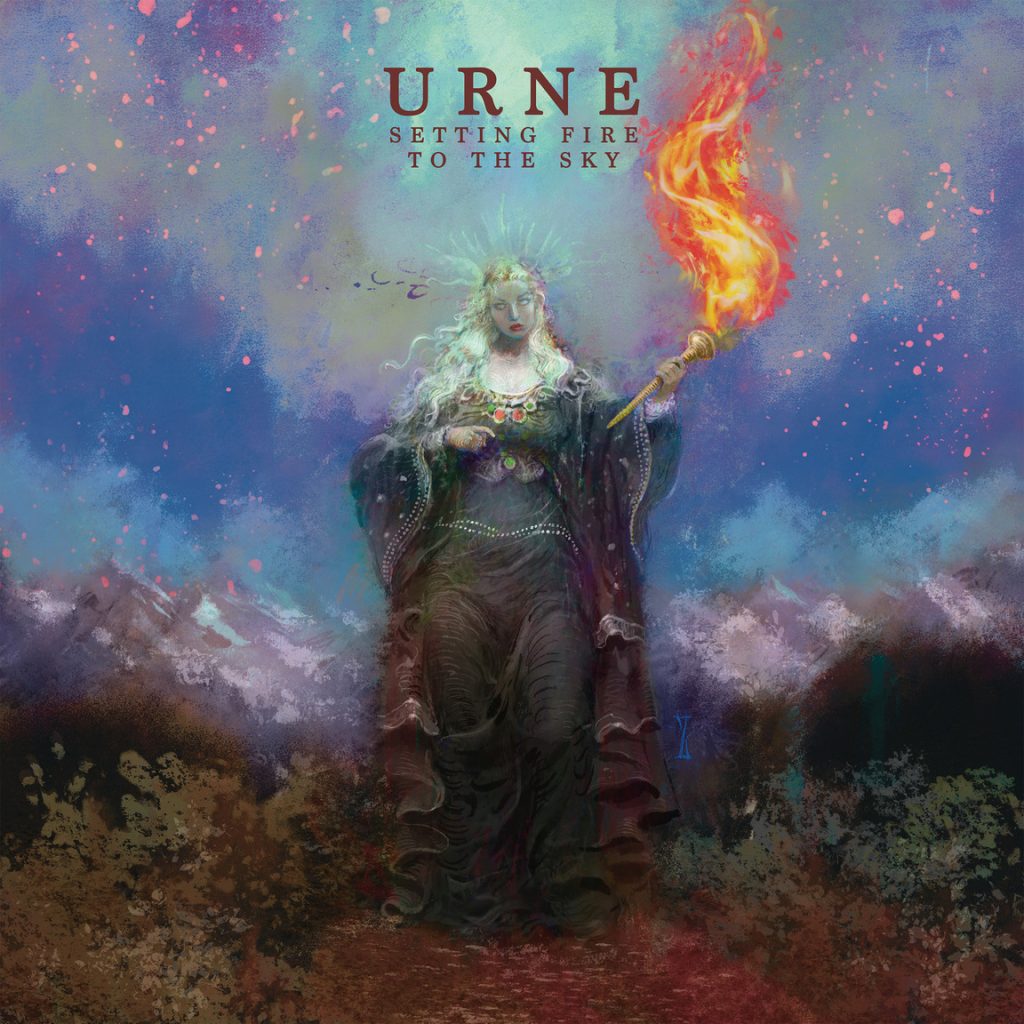
Setting Fire to the Sky – sortie le 30 janvier 2026
- Be Not Dismayed
- Weeping to the World
- The Spirit, Alive
- Setting Fire to the Sky
- The Ancient Horizon
- Towards the Harmony Hall
- Harken the Waves (feat. Troy Sanders)
- Breathe (feat. Jo Quail)
MU: Londres possède une scène heavy très diversifiée et en constante évolution. En quoi cet environnement a-t-il influencé l’approche de URNE dans le mélange des genres et le dépassement des limites?
Joe: Honnêtement, je ne nous vois pas vraiment comme faisant partie de cette scène. Je sais qu’il y a plein de groupes formidables, mais je n’ai pas l’impression qu’on en fasse réellement partie. Je fais des groupes depuis très longtemps et ceux avec qui j’ai grandi dans cette scène ont presque tous arrêté. On se concentre simplement sur URNE et sur ce qu’on peut faire pour avancer.
MU: En écoutant Setting Fire To The Sky, on ressent un fort travail sur les textures et les atmosphères. Quand les fans entendront l’album pour la première fois, qu’espérez-vous qu’ils remarquent ou qui les surprenne le plus?
Angus: Je pense que les fans seront surpris par le côté accrocheur de l’album et par la facilité avec laquelle on peut y entrer. Vocalement, Joe a écrit de véritables accroche-oreilles, et c’est bon signe de voir à quel point les gens qui ont déjà entendu quelques chansons les ont rapidement en tête.
MU: Pour conclure, merci de nous avoir accordé ce temps. Quel message aimeriez-vous laisser aux fans de longue date et à ceux qui découvriront URNE pour la première fois avec cet album?
Angus: Merci pour tout le soutien au fil des années, c’est ce qui nous motive à continuer et à faire des disques comme celui-ci. Pour ceux qui nous découvrent, j’espère que l’album vous touchera et vous donnera envie d’explorer davantage notre musique, et qu’on se verra bientôt dans une salle de spectacle.
▶ Prévente: https://www.URNE.lnk.to/SFTTS
▶ Stream: https://urne.lnk.to/TheSpiritAlive
Site officiel: https://www.urneofficial.com/
Facebook: https://www.facebook.com/urneband
Instagram: https://www.instagram.com/urneband
Bandcamp: https://urne1.bandcamp.com/
ENGLISH version
Interview with URNE (Joe Nally and Angus Neyra)
By Marc Desgagné (MetalUniverse.net, Quebec, Canada)
Recently, Marc Desgagné of MetalUniverse.net sat down with Joe Nally (vocals, bass) and Angus Neyra (guitar) of UK heavy outfit URNE. Both musicians answered the questions ahead of the release of their new album Setting Fire To The Sky, due out on January 30, 2026 via Spinefarm Records. The conversation explores the band’s evolution, their expanding sonic identity, the balance between heaviness and emotion, the creative process in the studio, key influences, as well as their current artistic vision.
MU: Your new album Setting Fire To The Sky, out January 30, 2026 via Spinefarm, feels like a bold statement for URNE. At what point did you realize this record would represent a significant step forward for the band?
Angus: As a band we’re always trying to push ourselves forward, and I feel SFTTS is the strongest step yet in where we want to be as musicians. For me, when we started practicing songs such as Be Not Dismayed or Ancient Horizon live, was when I realised we had something special. There was also a moment in the studio when we first heard Jo Quail’s cello layers over the final track Breathe, which hit me straight away.
MU: From stoner and sludge influences to modern metal and hardcore intensity, your sound feels broader and more confident than ever. How do you personally define URNE’s identity at this stage of your career?
Angus: At this stage I’d say our identity is being confident in drawing from all our influences, without feeling boxed in by any of them. We’ve learned a lot from our previous records, and on this album we stopped holding back from ideas just because they didn’t fit a label. Writing shorter songs also forced us to say more in less time, which helped us focus and made us more confident in where this broader sound can go next.
MU: The album opens with Be Not Dismayed, which features a striking acoustic beginning before the heaviness fully kicks in. Why was it important for you to start the record in such an unexpected and restrained way?
Angus: Be Not Dismayed was never really written with it being the opener in mind, but as more of the other songs fell into place, we started to get a sense that its intro and build-up starts the album right way. It was also something we’d never opened up with before on previous albums.
Joe: We always want our album openers to be different from each other so this was the perfect time to do the classic acoustic opener. We already have the next one in mind and it’s completely different to all the others.
MU: Looking back at your early releases and comparing them to Setting Fire To The Sky, how do you see the evolution of the band, both musically and as songwriters?
Angus: I think we’ve come a long way since our first album and even the EP when we were still finding our feet, but we always had a plan to keep building our sound with each release. From a guitar point of view, the previous two albums were written with us as a three-piece in mind, but SFTTS reflects us as a four-piece, with the added layers that make the songs feel much bigger and more expansive.
MU: Joe Nally has said that working on this record sometimes felt like being in Metallica in 1988. What does that comparison mean for the band in terms of ambition, confidence, and creative freedom?
Joe: For me, that period of Metallica they really did what they wanted to do and didn’t care what others thought, something they still do to this day, good or bad. We are also extremely confident with this line up and the music that we want to make. We write for ourselves and do what we want, you won’t see us trying to fit in just to make it.
MU: The opening of Weeping To The World briefly brings to mind the urgency and drive of Painkiller by Judas Priest, even though the song quickly goes in a very different direction. As musicians, which bands did you grow up listening to, and which early influences helped shape the sound URNE has today?
Angus: Priest were definitely one of my early influences on my guitar playing and I get the Painkiller reference, even though I wouldn’t say they’re a direct influence on our sound. I think watching Metallica Live Shit Binge and Purge was what started it all off for me. Then from there it was discovering upcoming bands from the 2000s to 2010s that stuck with me since like Mastodon or Opeth, but that’s just on the surface and the list could go on.
Joe: Metallica is always an obvious one and I feel Megadeth are too. Luckily myself and Angus listen to a lot of music and mostly non metal stuff, I think we are both at our chilled stage of life. For Weeping To The World, the origin of that came from Peter Gabriel which is very different to Judas Priest.
MU: Even with such a wide range of influences, URNE’s music feels cohesive rather than nostalgic. How do you draw from classic metal without simply recreating it, and instead turn it into something that feels current and personal?
Angus: I think the heart of classic metal is definitely there, but the way we write and arrange songs, and the tones and textures we use push it into something more modern and personal. Making sure the songs feel cohesive is a big part of that, because it’s so easy for things to turn into a collection of ideas rather than a finished song. We go over the songs again and again until it feels complete to us.
MU: The Spirit, Alive was the very first song written for this album and carries a strong message of hope and resilience. How did that track help shape the emotional direction of the entire record?
Joe: Well, the previous album was so dark lyrically, musically and visually that I knew we needed to push away from that. The moment that song was finished and the title fell in place, I knew this was the route we needed to go down.
MU: There’s a real sense of uplift and momentum throughout Setting Fire To The Sky, even when the music becomes heavy or aggressive. Was that positivity a conscious goal from the beginning?
Angus: Knowing that Joe wanted this album to be more uplifting lyrically compared to the last, we made sure that the music matched that in the same way. That didn’t mean suddenly writing all our songs in major keys, but finding ways to make the songs feel grander whilst still keeping the power there.
MU: You worked with Justin Hill of SikTh as producer, with mixing by Johann Meyer and mastering by Tony Lindstrom. How did that production team help refine and challenge your sound?
Joe: We wanted a slightly more modern sounding record and for me, the bass needed to shine through more. Justin is also a singer and he helped me so much with what I thought I could and what I could actually do. Johann works with Gojira both live and on albums, so we always have faith that we will get the result that we are after.
MU: The album features notable guest appearances, including Troy Sanders of Mastodon on Harken The Waves and cellist Jo Quail on the closing track Breathe. How did those collaborations come together, and what did they bring to the album’s emotional range?
Joe: Thankfully we have a great team around us at the label and they handled getting them both on board and both seemed to be really happy to have been asked. Jo Q is such a wonderful talent and she got the task of what was needed right away and for Troy, no one does emotional metal better than Mastodon and to have one of those on board means the world to us.
MU: Harken The Waves stretches past nine minutes and feels almost cinematic in scope. What draws you to longer, more expansive compositions like this?
Angus: Harken The Waves was actually the last song written for the album, but it’s one we spent a lot of time on. Being really into film soundtracks, writing longer songs like this lets us explore ideas more slowly and take the listener on a journey in a similar way. It gives the music room to build and breathe, which felt right for this song.
MU: As a band, what inspires you the most creatively right now, composition, lyric writing, time spent in the studio, or the energy of performing these songs live?
Angus: Out of those choices, for me it’s about imagining how the songs will come across live. Whilst I enjoy the recording process, playing these songs live is where I really connect with them. There’s something about live music that brings out a different side of a song and makes it hit on a deeper level.
MU: London has a diverse and constantly evolving heavy music scene. How has being part of that environment shaped URNE’s approach to blending genres and pushing boundaries?
Joe: Honestly, I don’t see us as a part of that scene. I know there are a ton of great bands but I don’t feel like we’ve been a part of it. I’ve been doing bands for a long time and those I grew up with in the scene have all packed it in. We just focus on URNE and what we can do to push forward.
MU: When listening to Setting Fire To The Sky, there’s a strong sense of shifting textures and layered atmospheres throughout the album. When fans hear the record for the first time, what do you hope surprises them most about this expanded side of URNE’s sound?
Angus: I think fans will be surprised by how catchy this album is and how easy it is to get into. Vocally, Joe has written some proper earworms, and it’s been a good sign seeing how quickly people who’ve already heard a few songs get them stuck in their heads.
MU: Before we wrap up, thank you for taking the time to speak with us. As Setting Fire To The Sky is released into the world, what message would you like to leave with longtime supporters and those discovering URNE for the very first time?
Angus: Thank you for all the support over the years. It’s what keeps us pushing forward and making records like this. For anyone discovering us for the first time, hopefully this album connects with you and makes you explore more of our music, and hopefully we’ll see you at a show soon.